Job Forge
An AI-powered job-application toolkit that generates tailored resumes and cover letters from LaTeX templates using the Claude Agent SDK - cloned and run locally, with personal data kept off version control.
- Claude Agent SDK
- LaTeX
- XeLaTeX
- Docker
- Git
Screenshots
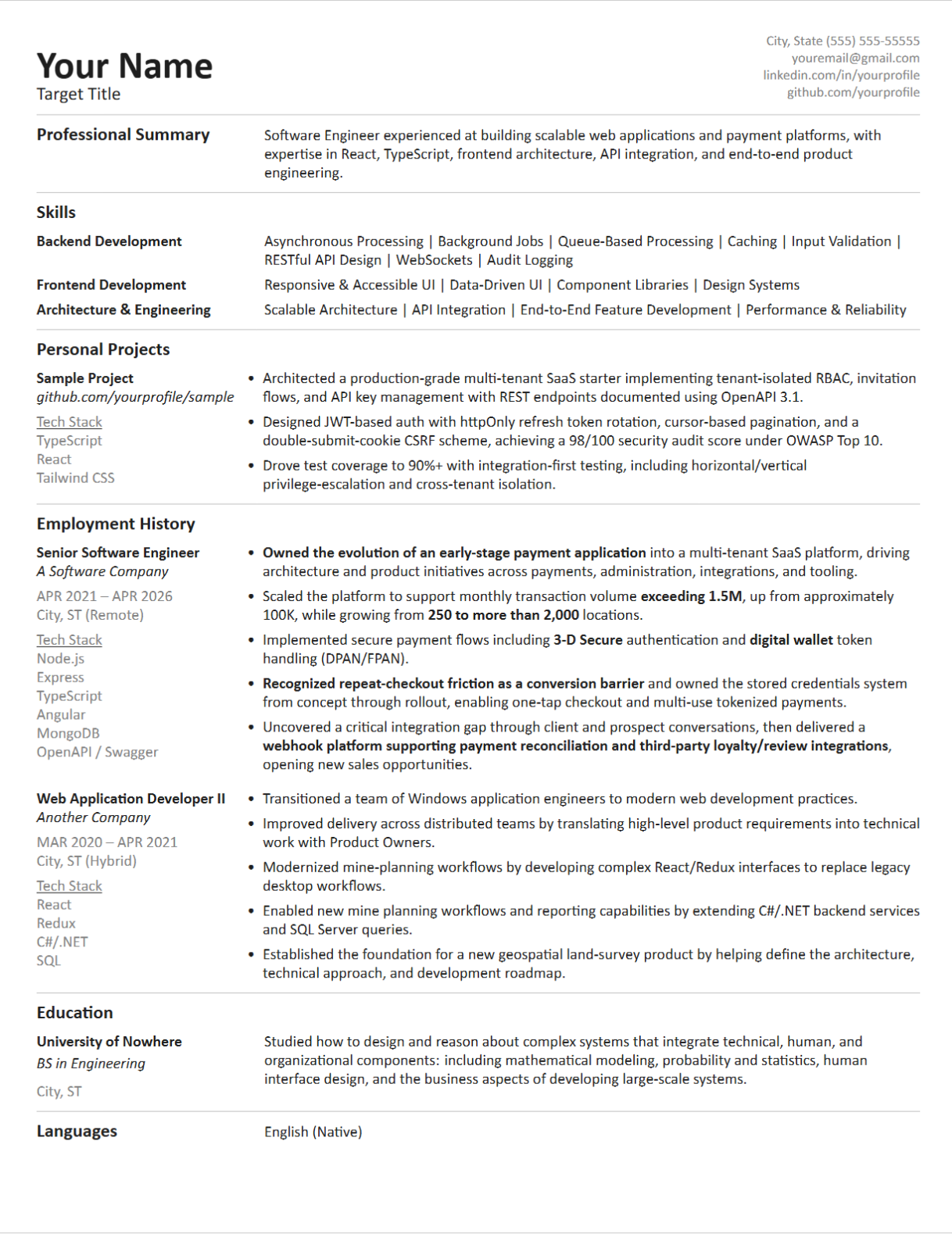
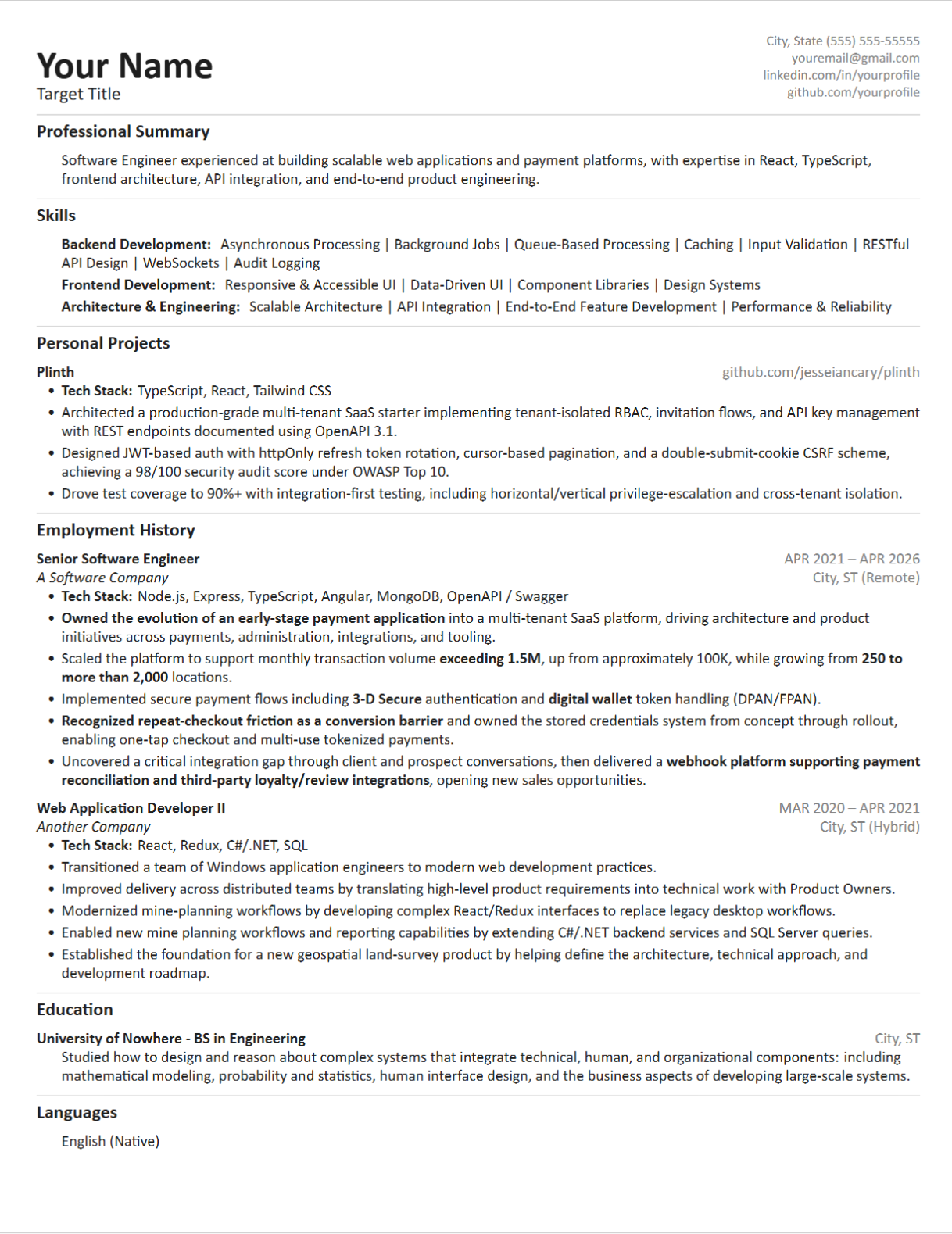
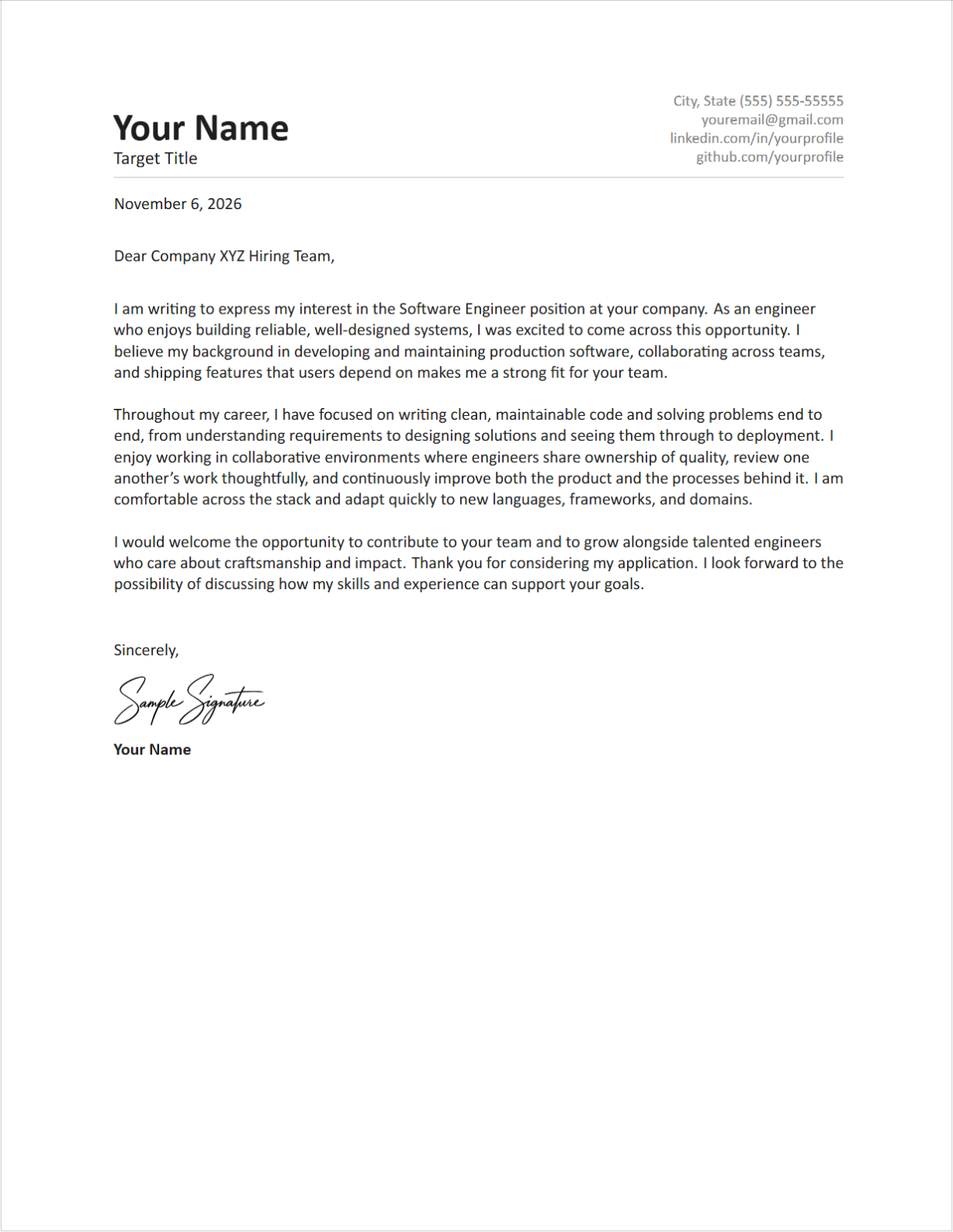
Overview
Job Forge is an AI-powered toolkit for the tedious part of a job search: tailoring a resume and writing a cover letter for every single application. It pairs the Claude Agent SDK with a set of LaTeX templates so a software engineer can pick the right resume variant, hand it a job description, and get professionally typeset, customized materials back. It is a local toolkit rather than a hosted app - you clone the repo and run it on your own machine, which keeps your personal data under your control.
What I built
- Resume variants per role type (backend, full-stack, and so on) so each application starts from the most relevant base.
- AI-driven tailoring of both the resume and the cover letter to a specific job description and company, driven through the Claude Agent SDK.
- LaTeX / XeLaTeX typesetting for clean, professional output, with a consistent look across every document.
- A centralized, template-based config for personal info, so contact details and history live in one place instead of being duplicated per application.
- An optional Docker Compose workflow for a reproducible toolchain without installing a LaTeX distribution by hand.
Challenges
The core constraint was that personal and sensitive data must never land in
version control. I solved it with template config files that each user copies
and fills in locally, plus a .gitignore that excludes generated PDFs, LaTeX
auxiliary files, and the personal-info configs. Reliable LaTeX special-character
escaping (dollar signs, percent signs, and the like) and a clean separation
between reusable templates and per-application generated output were the other
details that needed care to keep the workflow trustworthy.
Outcome
The result is a reproducible, version-controlled application workflow: clone the repo, fill in the config templates once, and generate per-company applications locally on demand. It is intentionally run locally rather than deployed, so there is no live site - the source is on GitHub for anyone who wants to clone it and forge their own applications.